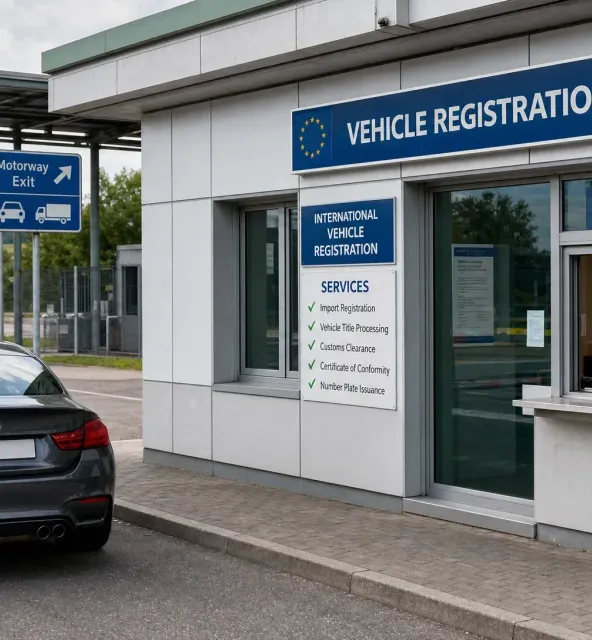
When You Need a Manufacturer Certificate of Conformity
JUMP AHEAD IN THIS ARTICLE
If you are importing, registering, or selling a vehicle across borders in Europe, the paperwork can feel confusing fast. One document that often decides whether the process moves smoothly is the manufacturer certificate of conformity, commonly called a COC or EC Certificate of Conformity.
In practical terms, this certificate connects your vehicle to its approved technical specification. It tells a registration authority that the vehicle was built according to an approved type and includes the data needed to identify, tax, and register it correctly. You may never need to show it while driving day to day, but when an authority asks for it, not having it can delay registration, inspection, or resale.
What a Manufacturer Certificate of Conformity Actually Proves
A manufacturer certificate of conformity is issued by the vehicle manufacturer or an authorized source. It confirms that a specific vehicle, identified by its VIN, corresponds to an approved vehicle type. For cars sold under EU type approval, the COC usually includes technical and environmental details such as the vehicle category, engine information, dimensions, masses, CO2 emissions, noise levels, tire sizes, and type-approval reference.
It is important to understand what the document does and does not prove. A COC is not proof that you own the car, not a service history, and not a roadworthiness inspection certificate. Instead, it is a technical compliance document used by authorities to verify the vehicle’s conformity and complete registration records.
The EU vehicle type-approval framework is set out in Regulation (EU) 2018/858, which explains the legal basis for approval and conformity documentation. If you want a broader breakdown of the document itself, 321COC also has a practical guide explaining what a Certificate of Conformity is for car owners.
When You Usually Need a Manufacturer Certificate of Conformity
Rules vary by country, vehicle category, vehicle age, and registration office, so the safest answer is always to check with the authority handling your file. That said, there are several common situations where a manufacturer certificate of conformity is requested or strongly recommended.
Registering an Imported Vehicle in Another European Country
This is the most common reason drivers need a COC. If you buy a car in one European country and want to register it in another, the local registration authority may need the COC to confirm the vehicle’s technical characteristics and EU approval status.
For example, a car bought in Germany and registered in France, Spain, Belgium, the Netherlands, Ireland, or another European country may require a certificate as part of the import registration file. The COC helps the authority avoid relying only on foreign registration papers, which may not contain every technical field required in the new country’s system.
This is especially relevant when the vehicle is used, already registered abroad, or missing part of its original documentation. Even if the car is legally registered in one EU country, the receiving country may still ask for detailed conformity data before issuing local plates.
Moving to Another Country With Your Own Car
You may also need a manufacturer certificate of conformity when relocating and bringing your own vehicle with you. This is not a traditional “purchase import,” but the administrative need can be similar because your vehicle must be entered into the new country’s registration database.
A move from Italy to Portugal, France to Luxembourg, or Belgium to Spain can trigger a full registration process. The registration office may ask for the COC to confirm the vehicle’s approval, emissions, weight, dimensions, and other technical values. According to the EU’s Your Europe vehicle registration guidance, registration formalities can differ between countries, which is why requirements should always be checked locally before your appointment.
Ordering the document before you move, or as soon as you know a registration appointment is required, can save time. Waiting until the file is rejected may mean restarting the process or paying for extra appointments.
Buying a Used Car With Incomplete Paperwork
A used car can look like a great deal until the paperwork becomes the problem. If the seller cannot provide the original COC, the registration authority may still be able to process the file using national documents, but this is not guaranteed.
A missing manufacturer certificate of conformity is particularly risky when the car is being sold across borders. The foreign registration certificate may not include all of the data your country needs. Missing CO2 figures, incomplete type-approval details, uncertain variant/version codes, or unclear engine information can all slow down the file.
Before buying, ask whether the original COC is included. If it is not, factor the cost and timing of obtaining a replacement into your decision. A cheaper car may not be cheaper if you lose weeks resolving registration documents.
Re-Registering a Vehicle After Export or Temporary Registration
Some vehicles pass through temporary registrations, export plates, transit plates, or dealer registrations before being permanently registered in another country. In these cases, the COC may be requested to confirm that the vehicle can be registered under normal national procedures.
This situation often arises with vehicles purchased from a dealer abroad, ex-lease vehicles, demonstration cars, or vehicles that have been deregistered for export. Even if the vehicle has valid export paperwork, the receiving authority may still need the manufacturer certificate of conformity to complete the final registration.
Selling a Car to a Buyer in Another Country
A COC can also matter when you are the seller. If your buyer plans to export the vehicle and register it abroad, having the manufacturer certificate of conformity can make the car more attractive and reduce uncertainty.
For private sellers, this can help avoid negotiations where the buyer lowers the price because paperwork is missing. For dealers and fleet sellers, including the COC can shorten the buyer’s registration process and support trust in the sale.
Resolving Missing Technical Data for Registration or Tax
A COC may be needed even when the core issue is not “import” but missing data. Many registration systems rely on precise technical information, including emissions, fuel type, engine power, weights, and vehicle category. These values can affect registration tax, annual road tax, environmental classification, or administrative eligibility.
If a registration office cannot find or validate the necessary figures from the foreign registration certificate, it may ask for the manufacturer certificate of conformity. The COC provides a standardized source of technical data tied to the vehicle’s VIN.

When You May Not Need a Manufacturer Certificate of Conformity
Not every vehicle transaction requires a COC. In some cases, the existing registration certificate and national records are enough. If the vehicle is already registered in your country and you are simply renewing insurance, changing address within the same country, or selling to a buyer who will keep the same national registration, a manufacturer certificate of conformity is often not requested.
You may also not need one if the registration authority accepts the foreign registration document as sufficient. Some countries can retrieve or validate the necessary information through national or EU systems, depending on the vehicle and the completeness of the records.
However, there are also situations where a COC may not solve the problem. If the vehicle was not built for the EU market, does not have EU type approval, is heavily modified, or is too old for the standard COC process, the authority may require an individual approval, technical inspection, national certificate, or other conformity procedure instead.
This is where terminology matters. A generic declaration, a dealer statement, or a workshop document is not automatically the same thing as a vehicle COC. If you are unsure, compare the documents carefully or review the difference between a declaration of conformity and a COC before submitting your file.
A Quick Way to Know If You Should Prepare One
If you are not sure whether to order a manufacturer certificate of conformity, start with the registration scenario. The more cross-border, technical, or incomplete the file is, the more likely the document will be useful.
You should check COC requirements early if any of these apply:
- The vehicle was bought in another European country.
- You are registering the vehicle in a different country from where it was first registered.
- The original COC is missing from the seller’s documents.
- The registration office asks for an EC Certificate of Conformity, COC, or manufacturer conformity certificate.
- The foreign registration certificate does not show complete emissions, approval, weight, or variant/version data.
- The vehicle is being exported, re-registered, or sold to a cross-border buyer.
The best time to check is before paying for the car or booking the registration appointment. If you already own the vehicle, check before your temporary plates, export plates, or insurance coverage expire.
Original COC, Duplicate COC, or Replacement Certificate?
When a new vehicle is first sold, the original COC may be supplied with the vehicle documentation. Over time, it can be lost, kept by a previous owner, misplaced by a dealer, or separated from the registration documents. In that case, you may need a duplicate or replacement issued through an authorized channel.
A duplicate COC is usually tied to the VIN, not just the make and model. That is because two cars of the same model can have different engines, emissions values, variants, versions, wheel and tire combinations, or type-approval details. The registration authority needs the information for your exact vehicle, not a generic brochure specification.
Before ordering, verify the VIN carefully. A single wrong character can cause delays or make the document unusable for your file. The VIN on the vehicle, registration certificate, purchase invoice, and insurance documents should all match.
How to Avoid Registration Delays
Most COC-related delays happen because the document is requested late or the buyer assumes that foreign registration papers are always enough. You can reduce risk by treating the manufacturer certificate of conformity as part of your pre-registration checklist, not as an afterthought.
Before you submit your vehicle registration file, make sure you have:
- The exact VIN, copied from the vehicle and checked against the registration document.
- The current or previous registration certificate, if available.
- Proof of purchase or ownership, if required by the local authority.
- Any import, export, customs, or tax documents required in your country.
- Confirmation from the registration office about whether a COC is required for your vehicle.
Also pay attention to language and format. Some authorities specifically ask for the manufacturer’s EC Certificate of Conformity. Others may use local terms such as certificate of conformity, conformity certificate, EU type-approval certificate, or COC. If in doubt, ask the authority whether they require the manufacturer document linked to the vehicle’s VIN.
Ordering a Manufacturer Certificate of Conformity Online
If your registration authority asks for a COC, ordering online can be more convenient than contacting multiple offices or waiting for unclear dealer responses. The key is to use a provider that can supply official vehicle certificates for the relevant brand and market.
321COC helps drivers order official Certificates of Conformity online for many car brands across Europe. The process is designed for vehicle owners who need EU-compliant documents for registration, import, export, or re-registration. You can begin by checking your vehicle details through 321COC’s online COC service, with transparent pricing, secure checkout, and money-back protection as part of the service offer.
Before ordering, always confirm that your vehicle is eligible and that the document requested by your registration authority is indeed a COC. This is especially important for non-EU vehicles, modified vehicles, older vehicles, and vehicles with incomplete or unusual registration histories.
Frequently Asked Questions
Is a manufacturer certificate of conformity the same as a COC? In the vehicle context, yes. A manufacturer certificate of conformity is commonly called a COC or EC Certificate of Conformity. It is the document that links a specific vehicle to its approved technical specification.
Do I need a COC for every imported car? Not always. Many imported vehicles need one for registration, especially when moving a car between European countries, but requirements vary by country and vehicle. Always check with the registration authority before your appointment.
Can a foreign registration certificate replace the COC? Sometimes, but not always. If the foreign registration certificate contains all required technical data and the authority accepts it, a COC may not be necessary. If key information is missing, the authority may request the manufacturer certificate.
What if my vehicle was built outside the EU? A standard EU COC may not be available if the vehicle was not built under EU type approval. In that case, the registration authority may require an individual approval, technical inspection, or other national procedure.
Should I order the COC before buying a used car abroad? You may not need to order it before purchase, but you should ask whether the original COC is included and confirm local registration requirements. If the document is missing, consider the cost and timing before committing to the purchase.
Need a Manufacturer Certificate of Conformity?
If you are registering an imported vehicle, moving your car to another country, or completing cross-border vehicle paperwork, the manufacturer certificate of conformity can be the document that keeps your file moving. Check your requirements early, verify your VIN, and make sure you order the right document for your vehicle.
When you are ready, you can use 321COC to request an official Certificate of Conformity online for eligible vehicles and prepare your registration file with confidence.